When Money Fails: Why Currencies Collapse
[Disclaimer: This article is provided for general informational and educational purposes only and does not constitute financial, investment, or legal advice. Currency markets involve risk and can change rapidly. Readers should consult a qualified financial professional or advisor before making any financial decisions. The author and publisher assume no responsibility for actions taken based on the information presented.]
Currencies rarely disappear overnight. They erode, mutate, or get abandoned long before they officially vanish. When a currency “dies,” it usually means people stop trusting it, governments replace it, or the economy shifts toward alternatives.
History shows that currency collapse follows recognizable patterns. Hyperinflation, political instability, sanctions, and structural economic weakness repeatedly appear in struggling nations. Studying these patterns reveals a simple truth: currency failure is rarely sudden. It is a slow breakdown of confidence.
Currency Is Built on Trust
A currency survives on collective belief, not paper. Its value exists because people expect others to accept it tomorrow. When that expectation weakens, decline begins.
Governments protect trust through stable institutions, credible central banks, and controlled inflation. When those pillars crack, citizens seek alternatives such as foreign currencies, commodities, or crypto. That shift signals the early stages of currency abandonment.

Hyperinflation: When Money Stops Working
Hyperinflation is the most visible form of currency collapse. Governments print excessive money to cover deficits, causing prices to rise faster than wages. People rush to spend before value evaporates, accelerating the cycle.
Venezuela’s Bolívar demonstrates how hyperinflation destroys purchasing power. Citizens increasingly turned to US dollars and digital assets for daily life. Zimbabwe followed a similar path, repeatedly restructuring its currency in attempts to reset trust. Each reset bought time, but without reform, the new system inherited the same weakness.
Hyperinflation does more than shrink savings. It erodes confidence in the state itself, making recovery extremely difficult.
Political Breakdown and Isolation
Currencies cannot survive prolonged institutional collapse. War, unrest, and fragmented governance weaken tax systems and production. Governments respond with emergency money creation, pushing inflation higher.
The Sudanese Pound shows how conflict devastates monetary systems. Myanmar and Laos face similar pressures under political strain, where volatility drives citizens toward safer currencies. A currency may still exist legally while losing practical relevance in daily life.
External sanctions add another layer of pressure. The Iranian Rial illustrates how restricted access to global markets reduces international demand. Black markets expand, inflation rises, and substitutes dominate.
Money depends on both domestic and international trust. Lose either, and stability fades.
Slow Decline and Dollarization
Not every currency collapse is dramatic. Some fade gradually through chronic inflation. Argentina’s Peso functions day-to-day, yet citizens protect savings in dollars. Large transactions increasingly occur in foreign currency, a process economists call informal dollarization.
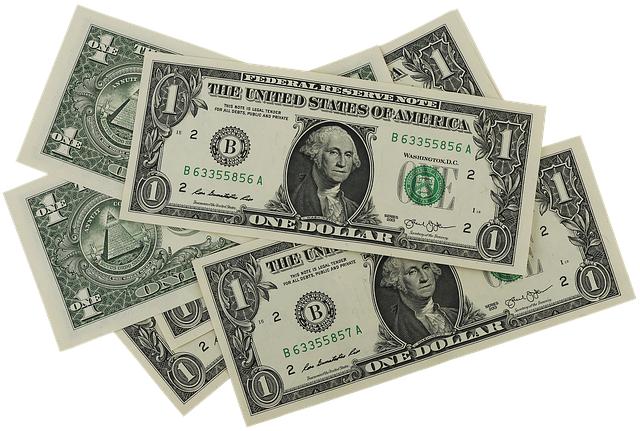
At this stage, the national currency survives legally but loses social dominance. Governments may eventually formalize what citizens already practice by pegging to or adopting another currency.
Currency death can be quiet.
Structural Weakness
Some currencies weaken through persistent trade deficits and low investor confidence. Nigeria’s Naira has faced repeated devaluations as import demand outpaces exports. While devaluation does not equal disappearance, repeated cycles hollow out credibility. Citizens begin pricing goods in foreign currency, and parallel markets emerge.
A currency loses strength long before it vanishes.
Replacement and Reinvention
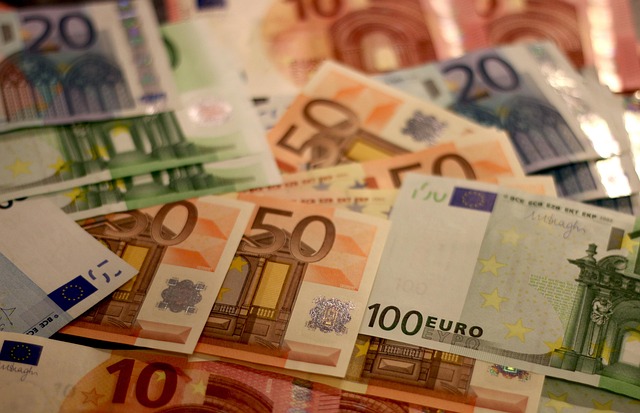
Governments sometimes retire currencies intentionally. The euro replaced national European currencies not because they collapsed, but to unify monetary systems. Other countries attempt redenomination or digital frameworks to reset inflation psychology.
Zimbabwe’s repeated resets show that replacing money without fixing economic policy rarely restores trust. A currency cannot outlive the system behind it.
What These Patterns Reveal
Currencies fail for predictable reasons: loss of trust, political collapse, sanctions, chronic inflation, structural weakness, or deliberate replacement. In every case, confidence is the root cause.
Modern economies are tightly interconnected, so currency instability spreads quickly. Travelers, migrant workers, and international businesses feel the impact immediately. Exchange access becomes critical during monetary stress.
Currencies do not simply disappear. They are abandoned when people stop believing in them. And every collapse tells the same story: money is only as strong as the trust supporting it.
Exchanging Your Expiring Currency
If you hold a currency that is being phased out or rapidly losing value and plan to travel or relocate to a eurozone country, it may be the right moment to exchange your funds. Acting early can help preserve purchasing power and avoid last-minute complications.
Globex offers competitive exchange rates, transparent pricing, and secure international money transfer services designed for travelers and expatriates alike. With branches across the French Riviera, you can exchange currency confidently and efficiently.
| Branches | Exact Address | Opening Hours | Opening Days |
|---|---|---|---|
| Antibes | 22 Avenue Robert Soleau, 06600, Antibes, France | 8:30 am to 12:30 pm; 1:30 pm to 6:00 pm | Monday to Friday |
| Beausoleil | 13 Boulevard de la République, 06240, Beausoleil, France | 8:30 am to 12:30 pm; 1:30 pm to 6:00 pm | Monday to Saturday |
| Menton | 12 Avenue Boyer, 06500, Menton, France | 8:30 am to 12:30 pm; 1:30 pm to 6:00 pm | Monday to Friday |
| Nice Riquier | 31 Rue d’Angleterre, 06000, Nice, France | 8:30 am to 12:30 pm; 1:30 pm to 6:00 pm | Monday to Friday |
| Nice Ville | 22 Boulevard Pierre Sola, 06300 Nice, France | 8:30 am to 12:30 pm; 1:30 pm to 6:00 pm | Monday to Saturday |
Choose Globex for a smooth, reliable exchange experience and trusted support for your international money needs.