Bulgarian Lev: History, Stability, and Euro Transition
The Bulgarian lev (BGN) dates back to 1881, soon after Bulgaria began asserting its national sovereignty following centuries under Ottoman rule. The term lev means “lion,” symbolizing strength and independence. Early monetary legislation in 1880 tied the lev’s value to the French franc, ensuring stability and credibility for the young nation.
Throughout the 20th century, the lev’s story mirrored Bulgaria’s economic and political changes—from wars and inflation to modernization and EU integration.
Redenominations and Economic Shifts
The lev has undergone several major transformations:
- 1952: After postwar hyperinflation, 100 old leva became 1 new lev.
- 1962: Another revaluation followed at a rate of 10:1.
- 1999: The modern “third lev” was introduced under a new stabilization program.
By 1997, Bulgaria implemented a currency board system, pegging the lev first to the Deutsche Mark and later to the euro at a fixed rate of 1 EUR = 1.95583 BGN. This arrangement, still in place today, ensures long-term financial stability and aligns Bulgaria’s economy with the eurozone.
Modern Lev: Coins, Banknotes, and Design
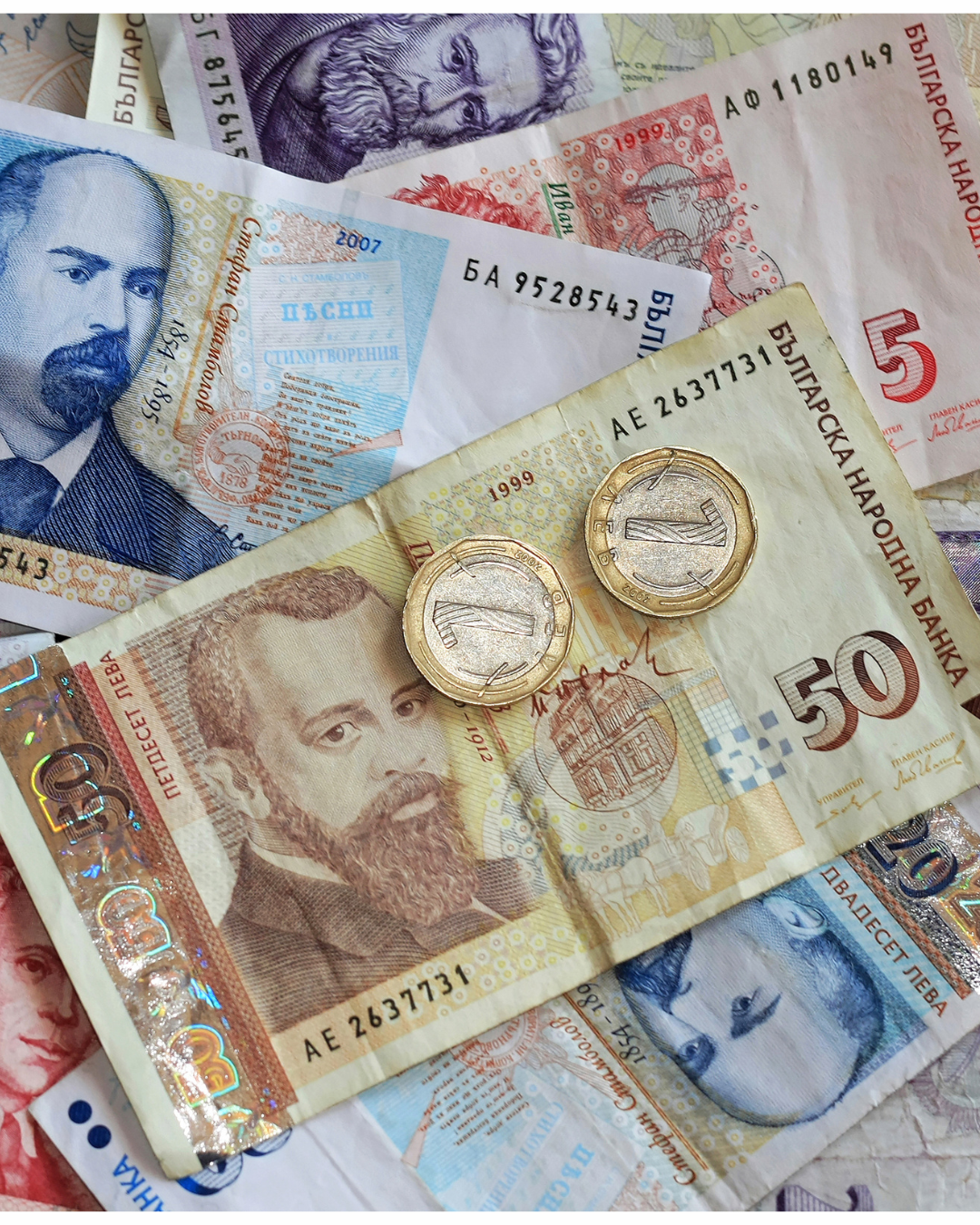
The lev is divided into 100 stotinki.
Coins in circulation: 1, 2, 5, 10, 20, and 50 stotinki, plus 1 and 2 lev coins.
Banknotes in use: 5, 10, 20, 50, and 100 leva.
Each note depicts key Bulgarian figures—from cultural icons to revolutionaries—and includes advanced anti-counterfeiting measures. These designs celebrate national identity while meeting European Central Bank standards.
Bulgaria’s Path to the Euro
Bulgaria joined the European Union in 2007 and committed to adopting the euro once all convergence criteria were met.
The country entered the Exchange Rate Mechanism II (ERM II) in July 2020, a crucial step before euro adoption.
By July 2025, both the European Commission and the European Central Bank confirmed that Bulgaria had fulfilled the economic and legislative criteria for euro adoption. The EU Council officially approved the country’s entry into the eurozone, setting January 1, 2026, as the date when the euro becomes Bulgaria’s new official currency.
This transition marks a historic step for Bulgaria, ensuring closer integration with the EU and more predictable trade and investment environments.
Why the Lev Still Matters
Until the euro fully replaces it, the lev remains vital to Bulgaria’s economy and identity.
- Stability and Predictability – The currency board guarantees exchange-rate stability and shields the economy from external shocks.
- Traveler Confidence – For tourists and investors, the lev’s peg to the euro means minimal volatility and transparent conversion rates.
- Cultural Significance – The lev stands as a powerful reminder of Bulgaria’s resilience, modernization, and national pride.
Preparing for the Euro Transition
When Bulgaria adopts the euro in 2026, 1 EUR will permanently equal 1.95583 BGN. Citizens will be able to exchange leva for euros free of charge at banks and post offices for a transition period extending into mid-2026.
For residents, travelers, and investors, understanding this conversion rate will be crucial for smooth financial planning and travel across Europe.
Exchanging Your Bulgarian Leva
If you have Bulgarian leva (BGN) and plan to travel or relocate to countries using the euro, it’s the perfect time to exchange your money.
Visit Globex for competitive exchange rates, transparent service, and secure international money transfers.
| Branches | Exact Address | Opening Hours | Opening Days |
|---|---|---|---|
| Antibes | 22 Avenue Robert Soleau, 06600, Antibes, France | 8:30 am to 12:30 pm; 1:30 pm to 6:00 pm | Monday to Friday |
| Beausoleil | 13 Boulevard de la République, 06240, Beausoleil, France | 8:30 am to 12:30 pm; 1:30 pm to 6:00 pm | Monday to Saturday |
| Menton | 12 Avenue Boyer, 06500, Menton, France | 8:30 am to 12:30 pm; 1:30 pm to 6:00 pm | Monday to Friday |
| Nice Riquier | 31 Rue d’Angleterre, 06000, Nice, France | 8:30 am to 12:30 pm; 1:30 pm to 6:00 pm | Monday to Friday |
| Nice Ville | 22 Boulevard Pierre Sola, 06300 Nice, France | 8:30 am to 12:30 pm; 1:30 pm to 6:00 pm | Monday to Saturday |
Enjoy a seamless exchange experience with Globex, your trusted partner in international money services on the French Riviera.